91茄子

See our live dashboard
News › Announcements

Ihaka Lecture Series 2021

For a general audience (with an interest in Statistics and/or Computing)

10 March at 6:30pm

91茄子 Science in the Connected Era
Dr Simon Urbanek, Senior Lecturer, Department of Statistics, University of Auckland

17 March at 6:30pm

Implementing a Machine-Learning Tool to Support High-Stakes Decisions in Child Welfare: A case study in Human Centred AI
Professor Rhema Vaithianathan, Centre for Social 91茄子 Analytics, AUT


24 March at 6:30pm

Modelling to support the COVID-19 response in Aotearoa New Zealand
Dr Rachelle Binny, Manaaki Whenua-Landcare Research and Te P奴naha Matatini

91茄子-Driven Art

91茄子-Driven Art

One of ODI鈥檚 NSF-funded projects,聽聽is creating learning experiences for middle school students which integrate data science with art.

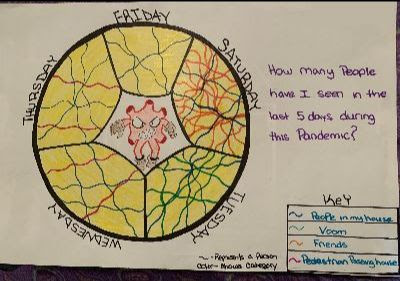
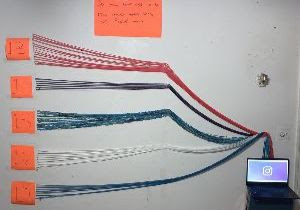
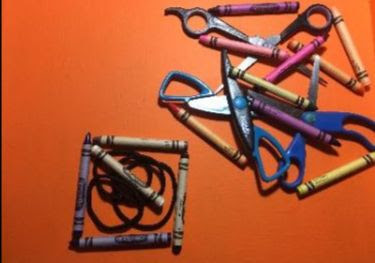
This past spring, the project researchers conducted a classroom pilot study of a 3-week long unit in collaboration with a math and art teacher pair. The study鈥檚 goals were to explore how students use mathematics and art to describe and make claims from data, and to examine the concepts and skills in visual arts, mathematics and data literacy evident in their work. The unit鈥攃o-designed with teachers鈥攇uided students in two data-based inquiry activities. One activity focused on collecting and using data to describe their experiences during the pandemic, and the second focused on exploring data on teen use of social media collected by Pew Research. Both activities culminated in the creation of art pieces based on the data they analyzed.

Our 91茄子 Pathways Community of Practice鈥攆or colleges and community colleges building data programs鈥攈as more than 25 members and is meeting virtually on a monthly basis.
Initial results from the students’ culminating art projects suggest that students were engaged in thinking about the patterns in the data, what they meant in context, and how to represent them through art. However, students varied in the extent to which they connected both their inferences and artistic choices to the data evidence, sometimes drawing on personal experience to make inferences, rather than the data, and results from the study suggest students needed more careful scaffolding for making data-based inferences. In the top left example below, a student drew a representation of how many people they saw in the last 5 days of the pandemic and included a key to understanding the data. In the top right exhibit, the yarn represents the percentage of teens who use social media, based on data from the Pew Research survey. And in the bottom left image, a student created a 3-D abstraction of the same Pew data (on teen internet use) using more colorful crayons to represent the teens who use the internet, and using structure to represent the student鈥檚 claim that teens who don鈥檛 use the internet are more organized and focused.
Due to the pandemic, the research team wasn鈥檛 able to pilot test in as many classrooms as they had originally planned, but they were able to adapt the units for online and asynchronous use, using the Web-based Inquiry Science Environment () platform. And in this school year, they are working with art and math teachers from four middle schools to build on last year鈥檚 findings, and codesign and pilot more arts-integrated data literacy units. This year they hope to incorporate dance as well as visual arts. (Aren鈥檛 you curious about dancing to data?!)

We don鈥檛 know the form the modules will take this year given the pandemic, but the team is developing curricula designs and plans that are flexible enough to adapt to the different teacher and student contexts鈥攁 challenging process, as school circumstances are changing rapidly.

Wishing you and yours a happy, healthy holiday!

Randy Kochevar
Director, ODI

Last week the University of California sent a momentous email to 20,000 high schools announcing that they would now accept data science as an alternative to algebra 2 – this has huge implications for schools & students.

The ZDM special issue on Innovations in statistical modelling to connect data, chance and context聽is now freely available (open access) during October.

It would be great, if you could distribute the news via your networks.

Published 9 September 2020

Royal Society Te Ap膩rangi remembers celebrated mathematician Sir Vaughan Jones

It is with sadness we share news of the passing of Sir Vaughan Jones FRS Hon FRSNZ, aged 67, from the complications from an ear infection. Sir Jones will be remembered as a brilliant mathematician who made outstanding contributions to the field of mathematics, scientific research and higher education.

Sir Vaughan Jones was born and raised in New Zealand and went to the University of Auckland, graduating in 1973.

He moved overseas to earn his doctorate from the University of Geneva, and became a聽Professor of Mathematics at the University of California at Berkeley in 1985.

Despite his career overseas, Sir Vaughan worked hard to promote mathematics of the highest quality in Aotearoa. He has made key contributions to scientific research and post graduate education here in New Zealand and across the globe.

He is best known for the discovery of an unexpected link between the mathematical study of knots 鈥 a field dating back to the 19th century 鈥 and statistical mechanics, a form of mathematics used to study complex systems with large numbers of components. He found a new polynomial invariant for knots and links in three-dimensional space – something that had been missed by topologists during the preceding 60 years.

His discovery of what is now called the Jones polynomial had origins in the theory of von Neumann algebras.聽 Friend and long-time colleague of Sir Vaughan, Distinguished Professor Marston Conder FRSNZ told the聽聽that his work has had a wide application.

“[His] work in theoretical mathematics, which basically helps distinguish one knot from another, had application in biological science, enabling scientists to identify whether two different types of RNA are from the same source,” Marston said.

“That was an outstanding achievement because from theoretical mathematics, his discoveries had real significance in an entirely different field.”

Because of this work, Sir Vaughan became the first ever winner from the Southern Hemisphere of the Fields Medal in 1990, which is widely regarded as the 鈥淣obel Prize of Mathematics” because of the prestige it carries. He famously accepted the award in an All Blacks rugby jersey. He remains the only New Zealander to have won the Fields Medal.

In 1991, Sir Vaughan was the first winner of the Society鈥檚 prestigious Rutherford Medal. In 2012 the Society established the Jones Medal in his honour, for lifetime achievement in pure or applied mathematics or statistics.

Sir Vaughan was elected as a Fellow of The Royal Society, London in 1990 and elected as an Honorary Fellow of the Royal Society of New Zealand in 1991.聽In 2002 he was made a Distinguished Companion of the New Zealand Order of Merit (DCNZM) (later re-designated Knight Companion KNZM).

Our deepest condolences go out to the wh膩nau and friends of Sir Vaughan – he has left a prominent mark on the academic community, one that will not be forgotten.

Sir Vaughan is survived by his wife, Martha Jones, and three children.

Source:聽Royal Society Te Ap膩rangi

, is a free open-source e-book authored by the fabulous Tim Erickson. Designed for both teachers and students, this rich, interactive resource walks users through introductory lessons in data science with (Common Online 91茄子 Analysis Platform). Embedded CODAP documents bring each lesson to life. Give it a go!

Dr Michelle Dalrymple, Mathematics and Statistics Faculty Head at Cashmere High School in Christchurch, is the 2019 Prime Minister鈥檚 Science Teacher Winner.

Michelle鈥檚 teaching stands out because it is strongly based on cutting-edge mathematics and statistics education research, while maintaining originality, creativity, and fun with strategies that are relevant and inspiring for her students. …

What鈥檚 the superpower every student needs? Statistics, of course.

, Dean of Liberal Arts, Social and Behavioral Sciences at Austin Community College, and聽, Vice President and Chief Methodologist at The Urban Institute, led a discussion about how statistics鈥攖he science of learning from data鈥攊s the new superpower every student needs in their studies and career.

Statistics influences industries as varied as sports, fashion, public health, and more, and continues to increase in its importance and opportunities. In fact,聽聽and #6 among the top 100 Best Jobs by U.S. News & World Report.

Now more than ever, it鈥檚 a great time to take a statistics class and prepare yourself for a bright future.

The Concord Consortium are organising an interactive webinar on April 29 at 4 PM ET. . Participants will explore Fast Plants genetic data in your three-dimensional instruction. Participants will receive a lesson plan to teach genetic inheritance patterns and a certificate for one hour of continuing education credit.

See CODAP latest news and happenings:

https://mailchi.mp/concord/april-2020-dse-enews?e=e9cd617879